

Country information
Malawi
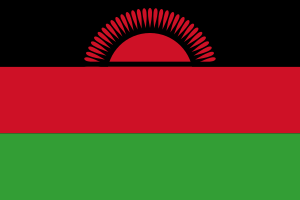
- Capital
- Lilongwe
- Population
- 20,734,262
Languages spoken
About Malawi
English - the sole official language, used widely in business, administration, judicial matters, and higher education.
Chewa and Tumbuka are recognized regional languages, spoken by the largest ethnic groups.
Lomwe, Yao, Ngoni, Sena, and other languages are also spoken among Malawi's ten major ethnic groups.
English is the sole official language of Malawi.
| Geography |
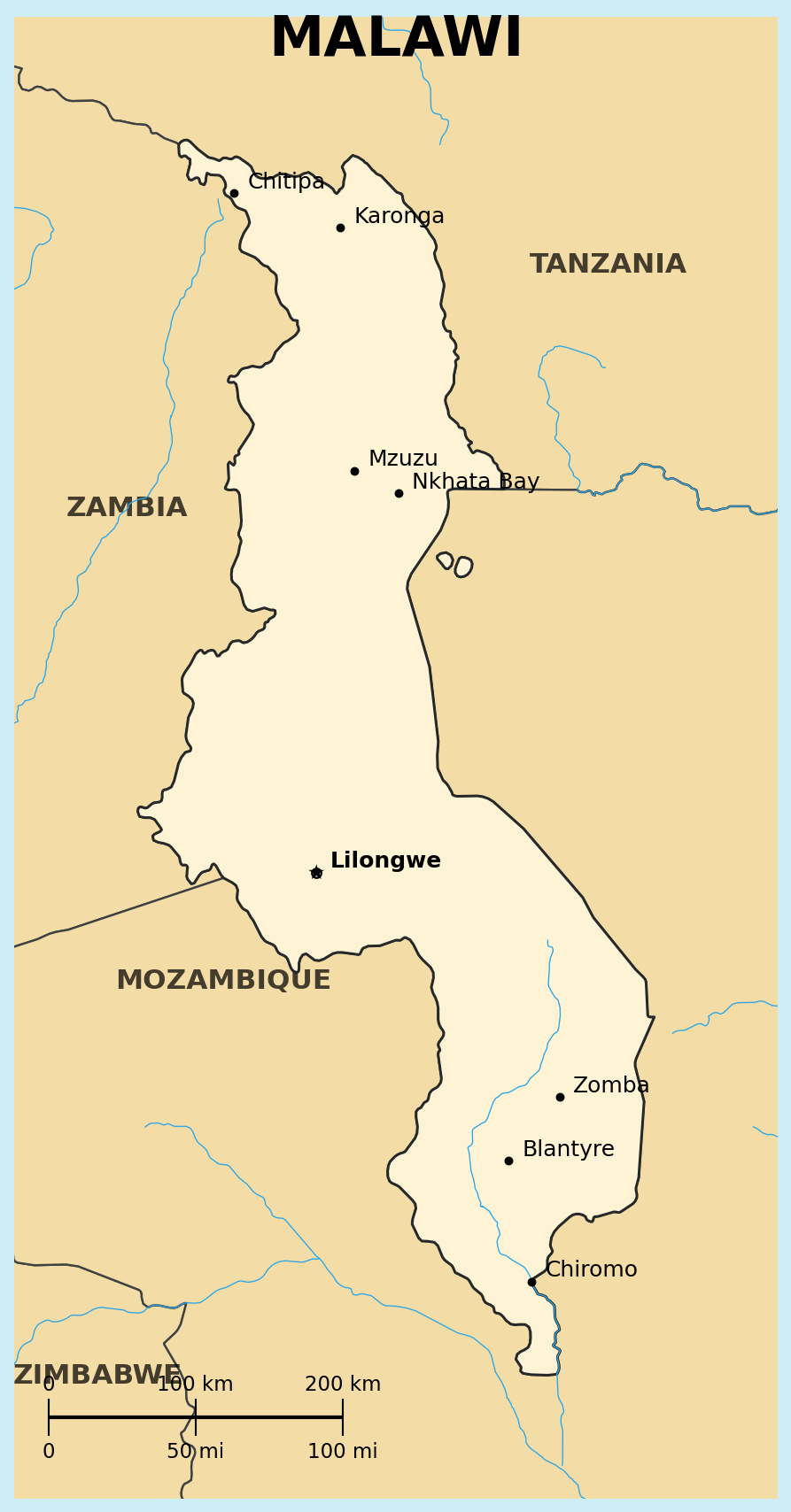
Location: Southeastern Africa, landlocked, along the East African Rift Valley
Map references: Africa
Area:
total: 118,484 sq km
Land boundaries:
border countries: Mozambique, Tanzania, Zambia
Geography - note: stretches about 840 km (520 mi) north to south, with a width varying from 10-160 km (5-100 mi); Lake Malawi (Lake Nyasa) accounts for more than one-fifth of the country's area
| People |
Population: 20.8-22.2 million (2022-2025 est.)
Age structure:
0-14 years: 45.87%
65 years and over: 2.68% (2022 est.)
Life expectancy at birth:
total population: 72.44 years
male: 69.33 years
female: 75.59 years
Infant mortality rate: 33.43 deaths/1,000 live births
Nationality:
noun/adjective: Malawian(s)
Ethnic groups: Chewa 25.2%, Tumbuka 20.4%, Lomwe 16.4%, Yao 15.3%, Ngoni 6.4%, Sena 5.9%, Mang'anja 3.8%, Tonga 1.8%, other 4.9% (2024 census); ten major ethnic groups historically associated with Malawi
Religions: Christianity 82.3% (Protestant 58.5%, Catholic 17.2%), Islam 13.8%, none 2.1% (2018 census)
Languages: English (official); recognized regional languages Chewa and Tumbuka; other languages spoken
Population distribution: comparatively low urbanization, with only around 18-20% of Malawians living in urban areas; Lilongwe and Blantyre are the primary urban centers; rural population density in the southern region is among the highest on the continent
| Government |
Country name:
conventional short form: Malawi; motto "Unity and Freedom"
Data code: MI
Government type: unitary presidential republic
National capital: Lilongwe
Independence: 6 July 1964 (from the UK)
Executive branch:
chief of state and head of government: President Peter Mutharika (DPP), elected 2025 with 56.8% of the vote
Background: the area now known as Malawi was settled around the 10th century by the Akafula, later displaced by Bantu groups who formed kingdoms such as the Maravi and Nkhamanga, flourishing from the 16th century; Malawi has enjoyed sustained peace and stable governments since independence in 1964; one-party rule ended in 1993, and multi-party elections have been held every five years since; the seventh tripartite elections were conducted in September 2025
| Economy |
Economy - overview: low-income, least-developed economy; among the poorest countries in the world; heavily dependent on agriculture, which employs over 80% of the population; vulnerable to external and climatic shocks; the government's Malawi 2063 Vision aims to transform the country into a wealthy, self-reliant, industrialized upper-middle-income nation
GDP (purchasing power parity): $42.77 billion (2025 est.)
GDP - real growth rate: 1.9-3.5% (varies by source; 2025)
GDP - per capita: $1,780 PPP (2025 est.)
Inflation rate: 8.4% (2020 est.)
Unemployment rate: 5.1% (2025 est.)
Population below poverty line: 51.5% (2016)
Currency: Malawian kwacha (MWK)
| Military |
Military branches: Malawi Defense Force (MDF): Malawi Army, Malawi Maritime Force, Malawi Air Force, Malawi National Service; Ministry of Homeland Security: Malawi Police Service (2025)