

Country information
Nigeria
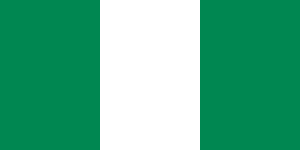
- Capital
- Abuja
- Population
- 223,800,000
Languages spoken
About Nigeria
English - the sole official language, used for national administration, business, and education.
Hausa (spoken by ~30% of the population), Yoruba (~15.5%), Igbo (~15.2%), and Fulani (~6%) are among the most widely spoken indigenous languages.
Nigeria, Africa's most populous country, is composed of more than 250 ethnic groups, with over 500 additional indigenous languages spoken.
English is the sole official language of Nigeria.
| Geography |
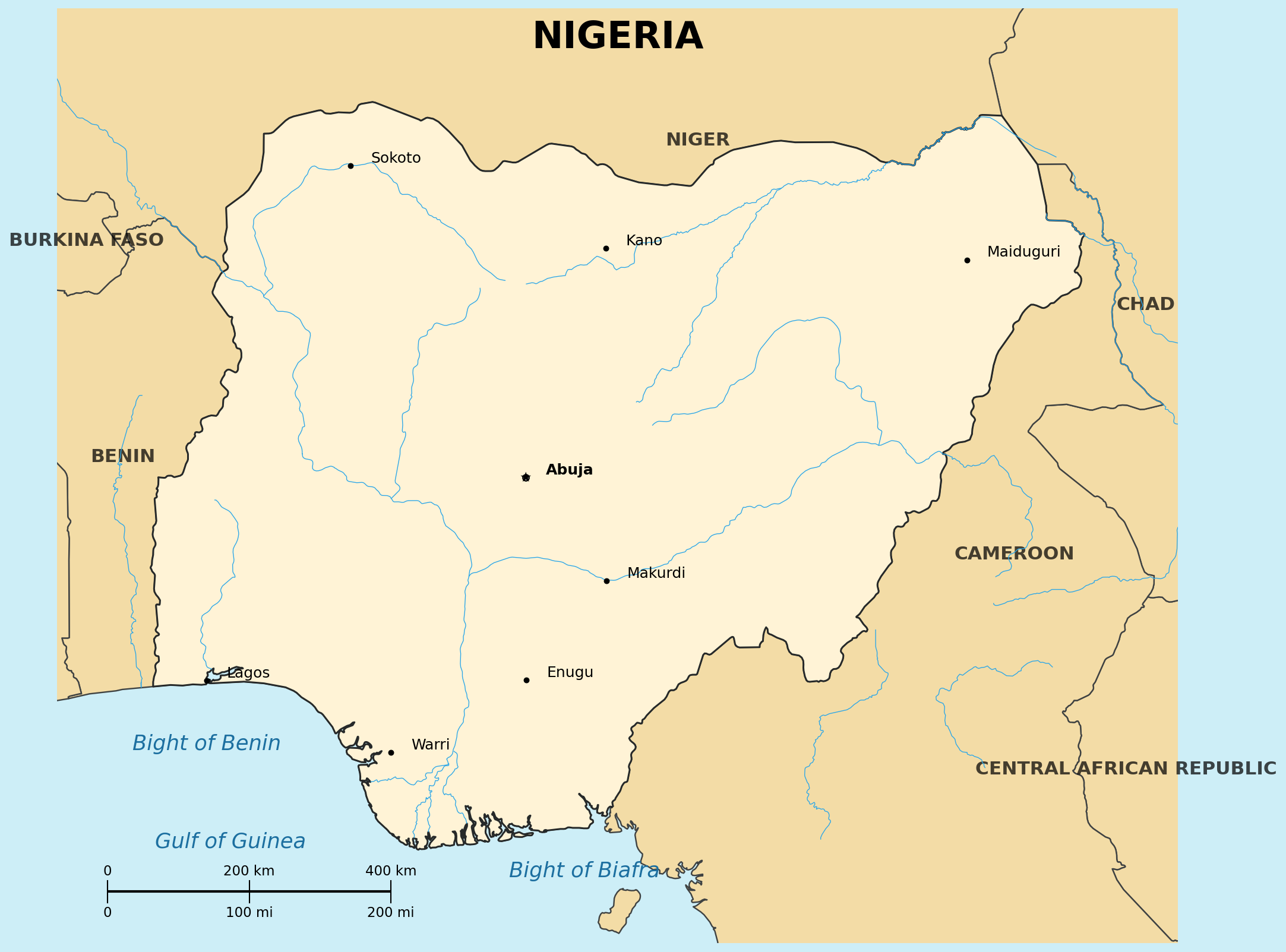
Location: Western Africa, bordering the Gulf of Guinea, between Benin and Cameroon
Map references: Africa
Area:
total: 923,768 sq km; larger than the US state of Texas
Land boundaries:
border countries: Benin, Cameroon, Chad, Niger
| People |
Population: 223.8-244.3 million (2023-2025 est.); the most populous country in Africa, and 7th most populous in the world; projected to become the world's 3rd most populous country by 2050
Age structure:
0-14 years: 51.7%
65 years and over: 3.3% (2022 est.)
Life expectancy at birth: total population 52.68 years (male 52.28, female 53.07)
Infant mortality rate: 56.68 deaths/1,000 live births
Nationality:
noun/adjective: Nigerian(s)
Ethnic groups: Hausa 30%, Yoruba 15.5%, Igbo (Ibo) 15.2%, Fulani 6%, Tiv 2.4%, Kanuri/Beriberi 2.4%, Ibibio 1.8%, Ijaw/Izon 1.8%, other 24.9% (2018 est.); more than 250 ethnic groups total
Religions: Islam, Christianity, and Traditional African religions
Languages: English (official), Hausa, Yoruba, Igbo (Ibo), Fulani, over 500 additional indigenous languages
Literacy: total population 63.2% (male 73.7%, female approximately 53%) (2021 est.)
| Government |
Country name:
conventional long form: Federal Republic of Nigeria
conventional short form: Nigeria
Data code: NI
Government type: federal presidential republic
National capital: Abuja; Lagos remains the leading commercial and industrial city
Independence: 1 October 1960 (from the UK)
Background: modern Nigeria was formed in 1914 when the British Protectorates of Northern and Southern Nigeria were joined; gained independence on 1 October 1960
| Economy |
Economy - overview: lower-middle-income, developing economy, one of the largest in Africa; heavily reliant on petroleum, natural gas, and other natural resources; significant reserves of crude oil, natural gas, coal, tin, and columbite; also a globally ranked natural gas exporter; key sectors include resource extraction, manufacturing, agriculture, forestry, and fishing
GDP (purchasing power parity): $2.254 trillion (2025 est.)
GDP - real growth rate: 4.1% (2026f)
GDP - per capita: $9,488 PPP (2025 est.)
Inflation rate: 15.69% (April 2026)
Unemployment rate: 3.1-4.9% (varies by source; 2025)
Population below poverty line: 30.9% on less than $2.15/day (2025); 63.5% on less than $3.65/day (2025)
Currency: Nigerian naira (NGN)
| Military |
Military branches: Armed Forces of Nigeria (AFN): Nigerian Army, Nigerian Navy (includes Coast Guard), Nigerian Air Force; Ministry of Interior: Nigeria Security and Civil Defense Corps (NSCDC); Ministry of Police Affairs: Nigeria Police Force (NPF) (2025)