
About Kosovo
Albanian - an official language, spoken by the large majority of the population (over 90%).
Serbian - also official, spoken mainly by the Serb community, especially in the north and in Serb enclaves.
Bosnian, Turkish, and Romani are recognized as official languages at the municipal level where these communities live.
Note: Kosovo declared independence from Serbia in 2008; its independence is recognized by many countries but not by Serbia and some others.
Albanian and Serbian are the official languages of Kosovo.
| Geography |
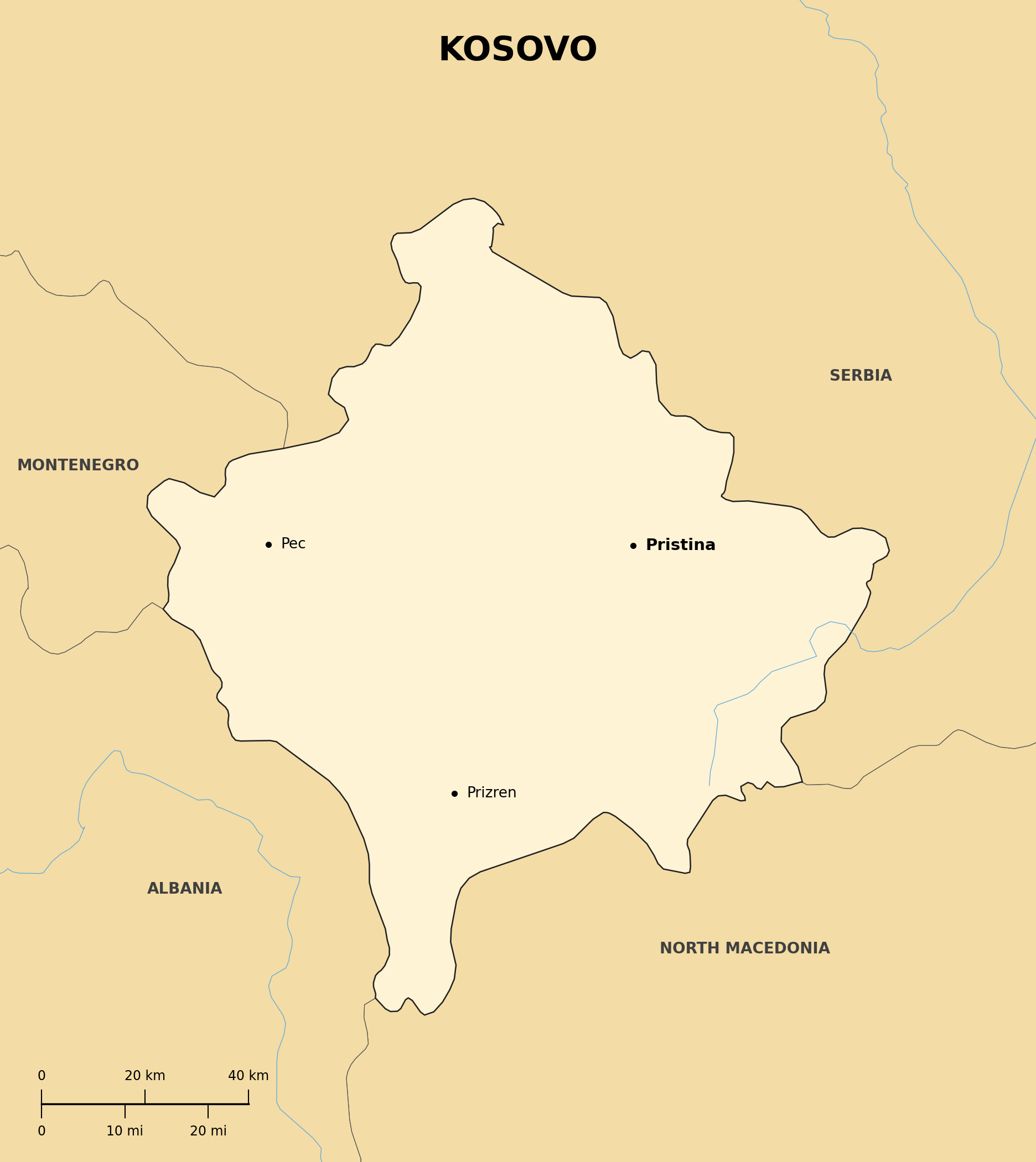
Location: Southeastern Europe, in the central Balkan Peninsula; landlocked
Map references: Europe
Area:
total: 10,887 sq km
Land boundaries:
border countries: Albania, Montenegro, North Macedonia, Serbia
Climate: continental; warm summers and cold, snowy winters
Terrain: flat fluvial basins surrounded by high mountains
| People |
Population: about 1.59 million (2024 census)
Nationality:
noun: Kosovar or Kosovan
adjective: Kosovar or Kosovan
Ethnic groups: Albanian over 90%, Serb, Bosniak, Turkish, Roma, Ashkali, Egyptian, Gorani
Religions: Muslim about 95%, Roman Catholic, Serbian Orthodox
Languages: Albanian (official), Serbian (official); Bosnian, Turkish, and Romani (official at the municipal level)
| Government |
Country name:
conventional long form: Republic of Kosovo
local short form: Kosova (Albanian); Kosovo (Serbian)
Data code: XK (unofficial)
Government type: parliamentary republic
National capital: Pristina (Prishtina)
Independence: 17 February 2008 (from Serbia); recognition remains disputed
Background: Kosovo was an autonomous province of Serbia within Yugoslavia; after the 1998-1999 conflict between Serbian forces and Kosovo Albanian insurgents and NATO intervention, it was placed under UN administration; it declared independence in 2008, which Serbia does not recognize