
Sanskrit
Most Popular Sanskrit Language Product Types

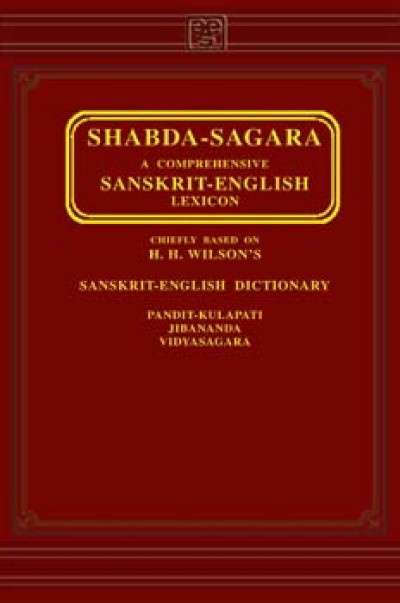
All Sanskrit language product types
Language Information
The oldest form of Sanskrit is known as Vedic Sanskrit, after the Vedas, the ancient hymns of the sacred Hindu scriptures. The later stage is known as classical Sanskrit, whose writings deal chiefly with secular subjects. For over three millennia Sanskrit continued to flourish as the language of learning in India, and the output of literary works continued without diminution until well into the 19th century. Although the competition of English as the language of government and science, coupled with the rising influence of the modern Indian languages, has undercut much of Sanskrit's former preeminence, it is still widely studied and, in fact, is even spoken by a number of Indian scholars.
Sanskrit is an Indo-European language, whose entry into the Indian subcontinent marked a new frontier for this widely dispersed family. Its Indo-European origin was, of course, unknown to the ancient and even to the medieval world. It was only in the 18th century that the striking sim~arity of Sanskrit to Latin and Greek was first noted in detail. Thus were set in motion the investigations that led to the discovery of the interrelationship of all the Indo-European languages, which in turn laid the foundation of the science of modern comparative and historical linguistics.
Sanskrit is written in an alphabet known as Devanagari. To trace its origin is to trace the development of writing in India. The source of most of the Indian alphabets is an ancient script known as Hrahmi which, in the opinion of most scholars, is of Semitic origin, probably Aramaic. One of its many offshoots was the Gupta script, used throughout the powerful Gupta empire in the 4th-6th centuries A.D. The Devanagari characters developed from a variety of Gupta, the earliest inscriptions appearing in the 7th century. The alphabet, which is written from left to right, consists of forty-eight signs, of which thirty-four are consonants and fourteen are vowels or diphthongs. It is considered one of the most perfect systems of writing ever devised.
- Language Family
- Indo-European
- Subgroup
- Indo-Iranian
- Branch
- Indic
Sanskrit Language Sample
Universal Declaration of Human Rights, Article 1
Sanskrit
सर्वे मानवाः स्वतन्त्राः समुत्पन्नाः वर्तन्ते अपि च, गौरवदृशा अधिकारदृशा च समानाः एव वर्तन्ते। एते सर्वे चेतना-तर्क-शक्तिभ्यां सुसम्पन्नाः सन्ति। अपि च, सर्वेऽपि बन्धुत्व-भावनया परस्परं व्यवहरन्तु।English translation
All human beings are born free and equal in dignity and rights. They are endowed with reason and conscience and should act towards one another in a spirit of brotherhood.
Source: OHCHR translations of the Universal Declaration of Human Rights