

Malay
Most Popular Malay Language Product Types
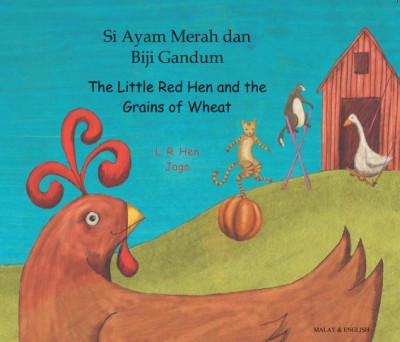

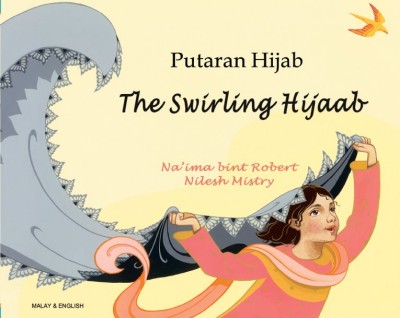
All Malay language product types
Language Information
Malay is a member of the MaIay-Polynesian family of languages Beginning in the 14th century, with the conversion of many Malays to Islam, a variation of the Arabic script known as Jawi was used for writing. In the 19th century the British constructed a Roman-based alphabet that is in general use today. It differs slightly from the one used in Indonesia, which was developed by the Dutch, but the resulting variations in spelling are in fact the only difference between the two languages. A few examples of these differences may be found in the article on Indonesian. Grammatical concepts in Malay differ radically from those in Western languages. Prefixes and suffixes as we use them are virtually absent, their functions being assumed by additional words. The plural of a noun is most commonly indicated by simply saying it twice, as in rumah-rumah in the passage below, which means "houses." After numbers, however, the noun reverts to the singular and an additional word is added, similar to the English construction "seven head of cattle." Malay has many of these "numerical coefficients"—one for people (orang—man), one for animals (ekor—tail), and others for flowers, jewels, threads, and even fishing nets. "Two cats" in Malay is dua ekor kuching ("two-tail-cat"), while "two children" is budak dua orang ("child-two-man").
Malay contains many words of Sanskrit and Arabic origin. English words of Malay origin include orangutan, gingham, sarong, bamboo, rattan, kapok, paddy, and amok.
Malay is spoken/used in the following countries:
- Language Family
- Malayo-Polynesian (Austronesian)
- Subgroup
- Indonesian
Malay Language Sample
Universal Declaration of Human Rights, Article 1
Malay (Latin)
Semua manusia dilahirkan bebas dan samarata dari segi kemuliaan dan hak-hak. Mereka mempunyai pemikiran dan perasaan hati dan hendaklah bertindak di antara satu sama lain dengan semangat persaudaraan.English translation
All human beings are born free and equal in dignity and rights. They are endowed with reason and conscience and should act towards one another in a spirit of brotherhood.
Source: OHCHR translations of the Universal Declaration of Human Rights