
Georgian
Most Popular Georgian Language Product Types
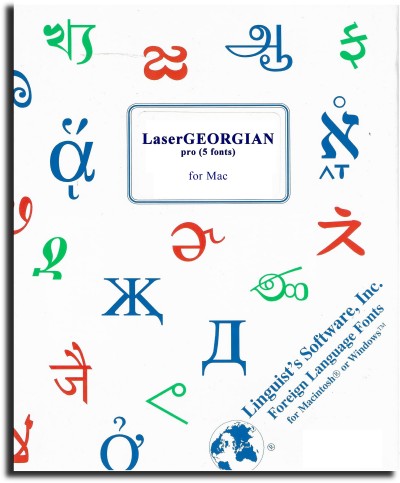
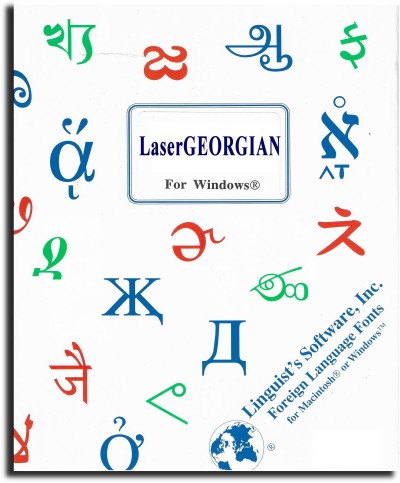
All Georgian language product types
Language Information
Georgian belongs to the Caucasian family, but since these languages have been grouped more on the basis of geography than linguistics, it is questionable whether any of the other Caucasian languages are actually related to it. In any event, it is the most widely spoken of these languages, and the only one with an ancient literary tradition.
The origin of the Georgian alphabet is obscure, but it is known to have been invented in the 5th century A.D. It is written from left to right. The present script, called Mkhedruli ("secular writing"), replaced the original Khutsuri ("church writing") in the 11th century. There are thirty-three letters, without distinction between upper and lower case, and with one letter for each sound and one sound for each letter.
The Georgians call themselves Kartvelebi and their land Sakartvelo. The language contains some formidable consonant clusters, as may be seen in the names of such Georgian cities as Tbilisi, Mtskheta, Tkvarcheli, and Tskhinvali. Many Georgian surnames end in -idze, -adze, -dali, and -viii. Joseph Stalin's original Georgian name was Dzhugashvili.
The Knight in the Tiger's Skin, the great epic of Georgian literature, was composed about the year 1200. It consists of more than 1,600 four-line stanzas, two of which are shown below. Virtually nothing is known of the author other than his name.
Georgian is spoken/used in the following countries:
- Language Family
- Caucasian
- Subgroup
- Southern
Georgian Language Sample
Universal Declaration of Human Rights, Article 1
Georgian
ყოველი ადამიანი იბადება თავისუფალი და თანასწორი თავისი ღირსებითა და უფლებებით. მათ მინიჭებული აქვთ გონება და სინდისი და ერთმანეთის მიმართ უნდა ექცეოდნენ ძმობის სულისკვეთებით.English translation
All human beings are born free and equal in dignity and rights. They are endowed with reason and conscience and should act towards one another in a spirit of brotherhood.
Source: OHCHR translations of the Universal Declaration of Human Rights