
Greek (Modern)
Most Popular Greek (Modern) Language Product Types
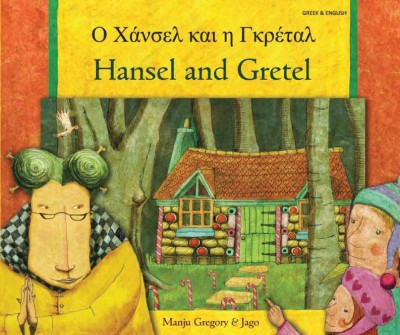
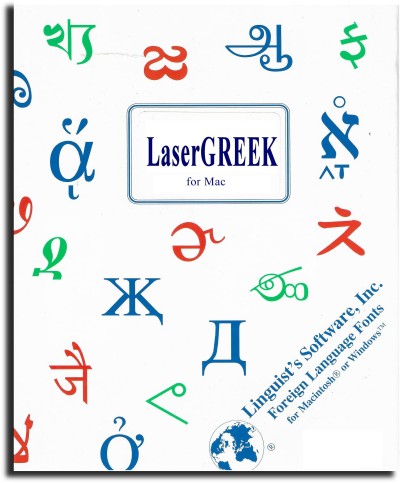
All Greek (Modern) language product types
- Bible
- Bible for Kids
- Children's Books
- Children's Books › Baby – K
- Children's Books › Grades 3 – 5
- Children's Books › Grades 6 – 8
- Children's Books › Grades K – 2
- Christian Study
- Dictionary
- ESL Lessons
- Fonts
- Games
- Keyboard Stickers
- Kids
- Learn
- Learn › Children's
- Poetry
- Religious Studies
- Software - Mac
- Software - Windows
- System
- Travel
- Word to Word Dictionary
Language Information
The Greek alphabet, an adaptation of the Phoenician, dates from about 1000 B.C. It was the first alphabet in which letters stood for vowels as well as for consonants, in contrast to the Semitic alphabets, which had only consonants. Like the Semitic alphabets, it was at first written from right to left, but then shifted to a style in which lines alternated from right-to-left and left-to-right, and then shifted again to the present left-to-right direction. An earlier form of Greek writing, known as Linear B and dating from 1500 B.C., was deciphered in 1952, but this was largely abandoned by 1200 B.C.
Greek was the official language of the Byzantine Empire from the 4th to the 15th century and thereafter continued to be spoken by Greeks under Turkish rule. Modern Greek began to take shape about the 9th century, and became the official language of the kingdom of Greece in the 19th. Today Greek is spoken by about 10 million people, including some 500,000 on the island of Cyprus. In addition to the common speech, known as Demotic, an imitation of classical Greek, known as Pure, has been revived for literary purposes.
The impact of Greek upon the vocabulary of all languages, including English, has been enormous. Such prefixes as poly- (much, many), , micro- (small), anti- (against), auto- (self), hemi- (half), hetero- (different), chrono- (time), tele- (distance), geo- (earth), physio- (nature), photo- (light), hydro- (water), litho- (stone), phono- (sound), anthropo- -(man), psycho- (mind), and philo- (love), each generate dozens of vital words in scientific, technical, and other fields. Equally important Greek suffixes are -meter (measure), -gram (letter), -graph (write), -scope (see), -phone (sound), and -phobia (fear).
Greek (Modern) is spoken/used in the following countries:
- Language Family
- Indo-European
- Subgroup
- Hellenic
Greek (Modern) Language Sample
Universal Declaration of Human Rights, Article 1
Greek (monotonic)
Όλοι οι άνθρωποι γεννιούνται ελεύθεροι και ίσοι στην αξιοπρέπεια και τα δικαιώματα. Είναι προικισμένοι με λογική και συνείδηση, και οφείλουν να συμπεριφέρονται μεταξύ τους με πνεύμα αδελφοσύνης.English translation
All human beings are born free and equal in dignity and rights. They are endowed with reason and conscience and should act towards one another in a spirit of brotherhood.
Source: OHCHR translations of the Universal Declaration of Human Rights