

Swahili
Most Popular Swahili Language Product Types

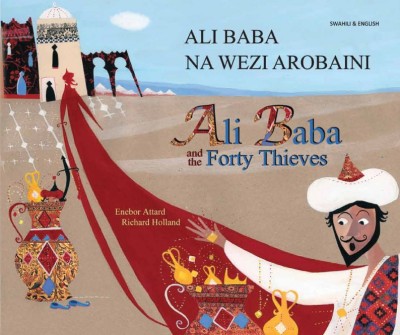
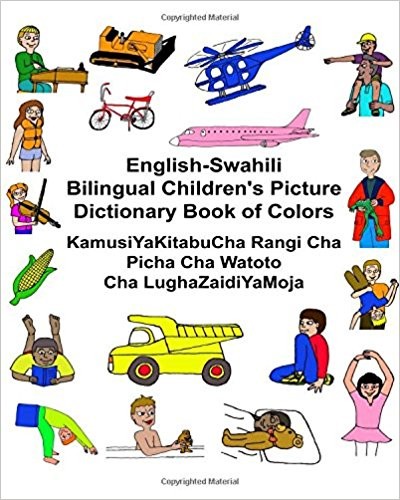
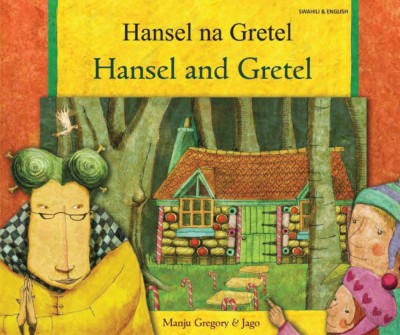
All Swahili language product types
Language Information
Swahili is one of the Bantu languages, which form a branch of the Niger-Congo family. Its vocabulary is basically Bantu but with many words borrowed from Arabic. The name Swahili is derived from an Arabic word meaning "coastal," having developed among Arabic speaking settlers fo the African coast beginning about the 7th century. During the 19th century it was carried inland by Arab tradesmen, and was later adopted by the Germans as the language of administration in Tanganyika. In modern Tanzania it is the national language, and in 1970 it was proclaimed the offical language of Kenya.
The Swahili alphabet lacks the letters c, q, and x, but contains a number of its own. The letter dh is pronounced like the th of "this" (e.g., dhoruba—hurricane), gh like the German ch (ghali—expensive), and ng' like the ng in "thing" but not as in "finger" (ng'ombe—cow). Whereas English grammatical inflections occur at the end of the word, in Swahili everything is done at the beginning. Kitabu is the Swahili word for "book" but the word for "books" is vitabu. This word falls into the so-called Ki Vi class, one of eight in the Swahili language. Others are the M Mi class (e.g. mkono—hand, mikono—hands; mji—town, miji—towns), and the M Wa class, used mainly for people (mtu—man, watu—men; mjinga—fool, wajinga—fools). Furthermore these prefixes are carried over to verbs of which the noun is the subject, as well as to numerals and modifying adjectives. Thus óne big book" in Swahili is kitabu kikiubwa kimoja ("book-big-one"), but "two big books" is vitabu vikubwa viwili.
Swahili is spoken/used in the following countries:
- Language Family
- Niger-Congo
- Subgroup
- Benue-Congo
- Branch
- Bantu
Swahili Language Sample
Universal Declaration of Human Rights, Article 1
Swahili
Watu wote wamezaliwa huru, hadhi na haki zao ni sawa. Wote wamejaliwa akili na dhamiri, hivyo yapasa watendeane kindugu.English translation
All human beings are born free and equal in dignity and rights. They are endowed with reason and conscience and should act towards one another in a spirit of brotherhood.
Source: OHCHR translations of the Universal Declaration of Human Rights