
Italian
Most Popular Italian Language Product Types

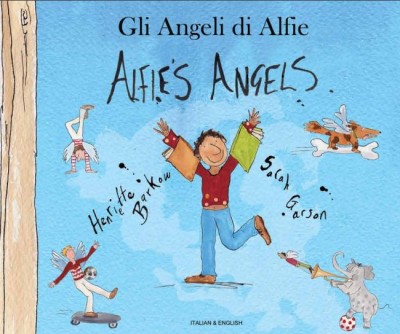

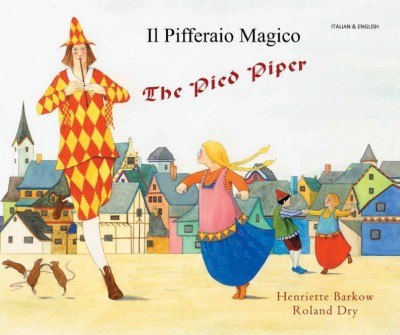
All Italian language product types
- Bible
- Board book
- Children's Books
- Children's Books › Baby – K
- Children's Books › Grades 3 – 5
- Children's Books › Grades 6 – 8
- Children's Books › Grades 9 – 12
- Children's Books › Grades K – 2
- Dictionary
- ESL Lessons
- Fiction
- Fonts
- Genealogy
- General Office
- Keyboard Stickers
- Kids
- Learn
- Learn › Children's
- Microsoft Office
- Phrase Books
- Pimsleur
- Software - Mac
- Software - Windows
- System
- Travel
- Word to Word Dictionary
Language Information
Italian is one of the Romance languages, and has remained closer to the original Latin than any of the others. its dialects, however, vary tremendously, often to the point where communication becomes a problem. The literary standard came into being in the 14th century, largely through Dante's Divine Comedy and the works of Petrarch and Boccaccio. Since these eminent authors chiefly used the dialect of Tuscany (especially Florentine), modern literary Italian is essentially Tuscan. Since 1870 the dialect of Rome has gained considerable prestige but it has still failed to eclipse the Florentine standard.
The Italian alphabet consists basically of 21 letters— j, k, w, x, and y appear only in foreign words. The letter c is pronounced k before a, o, and u, but ch before e and i (e.g., carcere—prison). Ch and cch are also pronounced k (chiave—key, bicchiere—glass). G is pronounced as a hard g before a, o, and u (gamba—leg), but as j before e and i (giorno—day). Gg before e and i is also pronounced j (oggi—today), gh before e and i is a hard g (lunghezza—length), gli followed by a vowel is pronounced lli as in "million" (biglietto—ticket), gn like the ny in "canyon" (ogni—every), and gu followed by a vowel as gw (guerra—war). Z and zz are generally pronounced ts (zio—uncle, prezzo—price), but sometimes as dz (pranzo—dinner, mezzo—middle). Sc before e and i is pronounced sh (pesce—fish).
The stress in Italian generally falls on the next to last or third from last syllable. The only written accent is the grave, which is used when-ever a word of more than one syllable stresses the final vowel (città—city). It is also used on words of a single syllable to distinguish between two words that would otherwise have the same spelling, as for example e, meaning "and," but è, meaning "is." And it also appears in a few miscellaneous words such as più (more) and già (already).
English words of Italian origin include umbrella, spaghetti, macaroni, broccoli, balcony, studio, casino, fresco, gusto, volcano, lava, stucco, gondola, regatta, malaria, bandit, incognito, vendetta, and inferno. In the field of music there are piano, viola, opera, sonata, concerto, oratorio, soprano, aria, solo, trio, quartet, allegro, andante, tempo, libretto, staccato, crescendo, maestro, and virtuoso.
Italian is spoken/used in the following countries:
- Language Family
- Indo-European
- Subgroup
- Romance
Italian Language Sample
Universal Declaration of Human Rights, Article 1
Italian
Tutti gli esseri umani nascono liberi ed eguali in dignità e diritti. Essi sono dotati di ragione e di coscienza e devono agire gli uni verso gli altri in spirito di fratellanza.English translation
All human beings are born free and equal in dignity and rights. They are endowed with reason and conscience and should act towards one another in a spirit of brotherhood.
Source: OHCHR translations of the Universal Declaration of Human Rights